10 Games That Deserve a Sequel But Still Don’t Have One
Discover 10 incredible games that left fans wanting more but never got sequels. From cult classics to critical darlings, these titles deserved follow-ups.
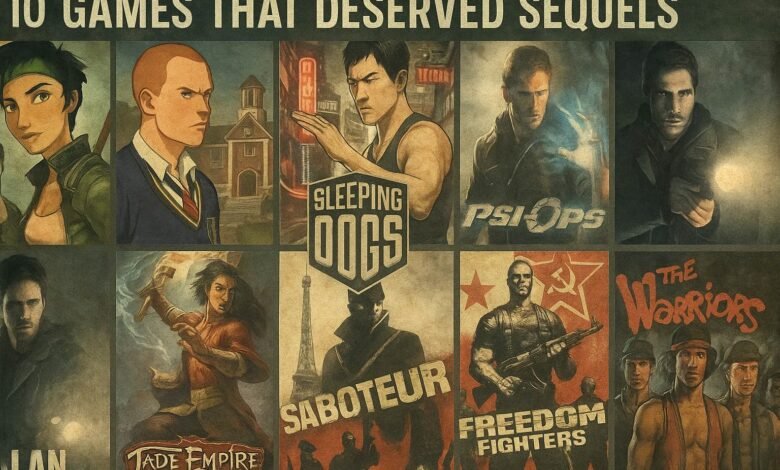
Some video games leave such a lasting impression that players spend years hoping for a sequel. Yet despite critical acclaim, passionate fan bases, and unique gameplay that set them apart, certain titles remain one-and-done experiences.
Whether due to financial struggles, studio closures, or simply bad timing, these games without sequels continue to haunt the dreams of dedicated gamers.
This article explores ten remarkable titles that absolutely deserved follow-ups but never received them. From puzzle adventures to action-packed shooters, these abandoned game franchises represent missed opportunities in gaming history.
Let’s dive into the games that left us hanging and examine why they never got the sequels fans desperately wanted.
EXPLORE THE CONTENTS
1. Beyond Good & Evil (2003)
Beyond Good & Evil stands as one of the most beloved action-adventure games that never received a proper sequel for nearly two decades. Created by Michel Ancel and released by Ubisoft, this game combined investigative journalism, stealth mechanics, and captivating storytelling in ways few games had attempted.
Why It Deserved a Sequel
The game introduced players to Jade, a photojournalist uncovering a conspiracy on the planet Hillys. The world-building was exceptional, featuring diverse alien species, memorable characters, and a story that ended on a cliffhanger. Critics praised its unique gameplay loop that mixed combat, photography missions, and puzzle-solving.
Players connected deeply with Jade’s journey and the colorful game world she inhabited. The game tackled mature themes like government corruption and propaganda while maintaining an accessible, family-friendly tone. This balance made it stand out in 2003’s gaming landscape.


What Happened
Despite critical praise, Beyond Good & Evil suffered from poor sales at launch. Marketing was minimal, and the game released during a crowded holiday season. While Ubisoft announced Beyond Good & Evil 2 in 2008, the project entered development hell and remains unreleased as of 2025, making the original game’s cliffhanger ending even more frustrating for fans.
2. Bully (2006)
Rockstar Games’ Bully took the open-world formula that made Grand Theft Auto famous and applied it to the life of a troublemaking teenager at boarding school. The result was a charming, funny, and surprisingly heartfelt experience that millions of players still remember fondly.
The Unique School Setting
Set in the fictional Bullworth Academy, the game let players attend classes, pull pranks, navigate social hierarchies, and eventually stand up to actual bullies. The school simulation gameplay offered something genuinely different from other Rockstar titles. Mini-games for different classes, seasonal changes throughout the school year, and a cast of memorable characters made Bullworth Academy feel alive.
Jimmy Hopkins, the protagonist, wasn’t a criminal or anti-hero in the traditional Rockstar sense. He was a troubled kid trying to survive in a harsh environment. This made his story more relatable to younger players while still offering the freedom and chaos Rockstar games are known for.
Why No Sequel Appeared
Rockstar chose to focus on bigger franchises like Grand Theft Auto and Red Dead Redemption. While rumors of Bully 2 have circulated for years, with alleged leaks and insider reports, nothing concrete ever materialized. The studio apparently started development multiple times but kept canceling the project to redirect resources elsewhere.
3. Sleeping Dogs (2012)
Sleeping Dogs delivered one of the best open-world crime experiences of the 2010s, yet it never received the sequel it clearly set up. Developed by United Front Games and published by Square Enix, this Hong Kong-set action game combined brutal martial arts combat with undercover cop drama.
What Made It Special
Players controlled Wei Shen, an undercover police officer infiltrating Hong Kong’s Triads. The hand-to-hand combat system drew inspiration from martial arts films, making every fight feel like a choreographed action sequence. The Hong Kong setting was meticulously recreated, with neon-soaked streets, bustling markets, and authentic Cantonese dialogue.
The story tackled the psychological toll of undercover work, forcing Wei to question his loyalty as he grew closer to the criminals he was supposed to betray. Side activities ranged from illegal street racing to dating to karaoke, creating a living, breathing city.
The Unfortunate Reality
Despite positive reviews and decent sales (over 1.5 million copies in the first few months), Square Enix considered it a commercial disappointment based on their inflated expectations. United Front Games closed in 2016, and the Sleeping Dogs franchise died with it. A sequel was reportedly in development but got canceled, leaving fans without closure on Wei Shen’s story.
4. Psi-Ops: The Mindgate Conspiracy (2004)
Psi-Ops pioneered psychic powers in third-person shooters years before games like Control made similar mechanics mainstream. Developed by Midway Games, it combined traditional gunplay with mind-bending telekinetic abilities that let players manipulate the environment and enemies in creative ways.
Revolutionary Gameplay Mechanics
The game gave players access to telekinesis, pyrokinesis, mind control, remote viewing, and mind drain. These psychic abilities weren’t just gimmicks but essential tools for solving puzzles and approaching combat scenarios. You could lift enemies with your mind and throw them off buildings, set objects on fire, or possess soldiers to turn them against their allies.
The physics system was ahead of its time, allowing genuine experimentation with how powers interacted with the environment. The story followed Nick Scryer, an amnesiac agent recovering his memories while fighting a rogue psychic organization.
Why It Ended on a Cliffhanger
Psi-Ops ended with a massive cliffhanger, clearly setting up a sequel. Unfortunately, Midway Games faced financial troubles throughout the mid-2000s and eventually filed for bankruptcy in 2009. The Psi-Ops sequel that was teased never materialized, leaving players forever wondering what happened next. Rights to the franchise remain unclear, making any revival unlikely.
5. The Saboteur (2009)
Set in Nazi-occupied Paris during World War II, The Saboteur offered a unique visual style and fresh take on the open-world genre. Developed by Pandemic Studios and published by Electronic Arts, it was the studio’s final game before closure.
The Bold Artistic Vision
The game’s most distinctive feature was its color-based gameplay mechanic. Areas under Nazi control appeared in black and white, while liberated zones burst into color. This visual representation of hope and freedom created a powerful artistic statement rarely seen in AAA games.
Players controlled Sean Devlin, an Irish race car driver turned resistance fighter seeking revenge against a Nazi officer. The gameplay mixed sabotage missions, stealth mechanics, and explosive action across beautifully recreated 1940s Paris. Climbing landmarks like the Eiffel Tower and destroying Nazi installations never got old.
The Studio’s Demise
Pandemic Studios shut down in 2009, the same year The Saboteur released. While the game received mixed-to-positive reviews and found an audience, EA decided not to pursue a sequel after closing the developer. The World War II setting combined with unique mechanics deserved exploration in additional games, but it wasn’t meant to be.
6. Alan Wake (2010)
Alan Wake delivered a psychological thriller experience that blended Stephen King-style horror with twin-stick shooter mechanics. While it eventually received a sequel in 2023, fans waited thirteen years for continuation of the story, and the game nearly became another abandoned franchise.
Why It Almost Never Got a Sequel
After its 2010 release, developer Remedy Entertainment struggled to secure funding for Alan Wake 2. Publisher Microsoft wasn’t interested in continuing the franchise, and finding a new publisher took years. The game’s moderate commercial performance made potential partners hesitant.
The first game ended with unresolved plot threads and mysterious implications about the nature of reality within its universe. Fans created online communities dedicated to analyzing every detail, theorizing about what happened to Alan Wake and whether he could escape the Dark Place.
The Long Wait Paid Off
Remedy finally partnered with Epic Games to produce Alan Wake 2, which released in 2023 to critical acclaim. However, the thirteen-year gap represents how close this beloved series came to never receiving resolution. Many fans gave up hope during the long silence, making it a cautionary tale about games that almost joined this list permanently.
7. Kingdoms of Amalur: Reckoning (2012)
Kingdoms of Amalur: Reckoning offered some of the smoothest combat mechanics in any action RPG, yet its troubled development and publisher bankruptcy killed any chance of sequels. Created by 38 Studios with involvement from author R.A. Salvatore and artist Todd McFarlane, it had serious talent behind it.
Exceptional Combat in a Massive World
The game featured a classless progression system that let players mix warrior, rogue, and mage abilities freely. Combat felt responsive and satisfying, with different weapon types offering distinct playstyles. The world of Amalur was vast, filled with hundreds of quests and interesting lore developed by Salvatore specifically for the game.
Players could craft gear, brew potions, and even buy houses across the realm. The main story dealt with fate and free will, as your character was resurrected without a predetermined destiny in a world where fate usually ruled everything.
Financial Catastrophe
38 Studios took out a $75 million loan from Rhode Island to develop Kingdoms of Amalur and fund an MMO set in the same universe. When the single-player game’s sales didn’t meet unrealistic expectations, the studio couldn’t repay the loan. 38 Studios declared bankruptcy in 2012, laying off all employees and canceling all future projects. The planned MMO and sequels died with the company, despite the game’s quality.
8. Jade Empire (2005)
BioWare’s Jade Empire took the developer’s RPG expertise and applied it to a mythology-inspired Asian fantasy setting. It remains one of BioWare’s most unique creations, yet the studio never returned to make a sequel.
A Different Kind of BioWare RPG
Instead of the medieval European fantasy of Dragon Age or the space opera of Mass Effect, Jade Empire drew from Chinese mythology and martial arts cinema. The real-time combat system replaced traditional turn-based RPG battles, focusing on different fighting styles you could switch between mid-combat.
The morality system presented choices between the Way of the Open Palm (harmony and balance) and the Way of the Closed Fist (power and self-determination), offering more philosophical nuance than simple good-versus-evil. The story involved political intrigue, supernatural threats, and questions about the nature of gods and spirits.
Why BioWare Moved On
After Jade Empire, BioWare focused on established franchises and new IPs like Mass Effect. The game sold reasonably well but not enough to justify a sequel when the studio had other projects demanding attention. Over the years, BioWare developers have expressed interest in returning to the Jade Empire universe, but competing priorities always took precedence. The rights remain with EA and BioWare, so hope exists, but nearly twenty years have passed without movement.
9. Freedom Fighters (2003)
Freedom Fighters let players lead a resistance movement against Soviet invaders in an alternate history where the USSR won the Cold War and invaded America. Developed by IO Interactive, it offered squad-based tactical gameplay years before it became common.
Tactical Squad Combat Done Right
The game’s squad command system was intuitive and effective. You could recruit up to twelve resistance fighters and issue simple commands that actually felt strategic. Completing objectives in certain orders affected later missions, providing a sense that your choices mattered in the larger conflict.
The atmosphere was oppressive and desperate, with Red Army propaganda posters and Soviet symbols covering New York City. Players felt like they were actually building a resistance movement from the ground up, gaining recruits and resources through completed missions.
What Went Wrong
IO Interactive moved on to focus exclusively on the Hitman series after Freedom Fighters. While the game reviewed well and found an audience, publisher Electronic Arts didn’t push for a sequel. IO eventually became independent from Square Enix in 2017, and they’ve expressed interest in revisiting Freedom Fighters, but no concrete plans have emerged. The alternate history setting had so much more potential to explore.
10. The Warriors (2005)
Rockstar’s The Warriors adapted the cult classic 1979 film into an exceptional brawler that expanded the movie’s story. It proved that licensed games could be both faithful and innovative, yet Rockstar never attempted another project like it.
More Than Just a Movie Game
The game served as both a prequel and adaptation, showing how the Warriors gang formed and grew before the events of the film. The street fighting gameplay was visceral and satisfying, with different combos, weapons, and environmental interactions. Gang territory mechanics added strategy to what could have been a simple brawler.
Rockstar captured the film’s gritty 1970s New York atmosphere perfectly, from the graffiti-covered subway cars to the distinct personalities of different gangs. The voice acting included several actors from the original film, and the story respected the source material while adding depth.
A One-Time Experiment
Rockstar treated The Warriors as a unique experiment rather than the start of a franchise. The game sold well and received critical praise, but the studio returned to Grand Theft Auto and their other major series. The ending left room for continuation, but Rockstar apparently had no interest in making licensed games a regular part of their portfolio, regardless of this one’s success.
Conclusion
These ten games represent missed opportunities in the gaming industry. Each offered unique gameplay mechanics, compelling stories, and dedicated fan bases that would have supported sequels. Whether due to studio closures, financial struggles, or shifting priorities, these games that deserved sequels never received proper follow-ups. From Beyond Good & Evil’s cliffhanger to Sleeping Dogs’ untapped potential, these titles remind us that critical acclaim and passionate fans aren’t always enough to guarantee continuation. While some like Alan Wake eventually found redemption, others remain frozen in time, forever unfinished stories that gamers still discuss and hope might somehow return. The gaming industry moves fast, but these abandoned franchises prove that truly great games leave lasting impressions that endure long after developers move on to other projects.